The Ultimate Guide to Understanding AI Aggregates

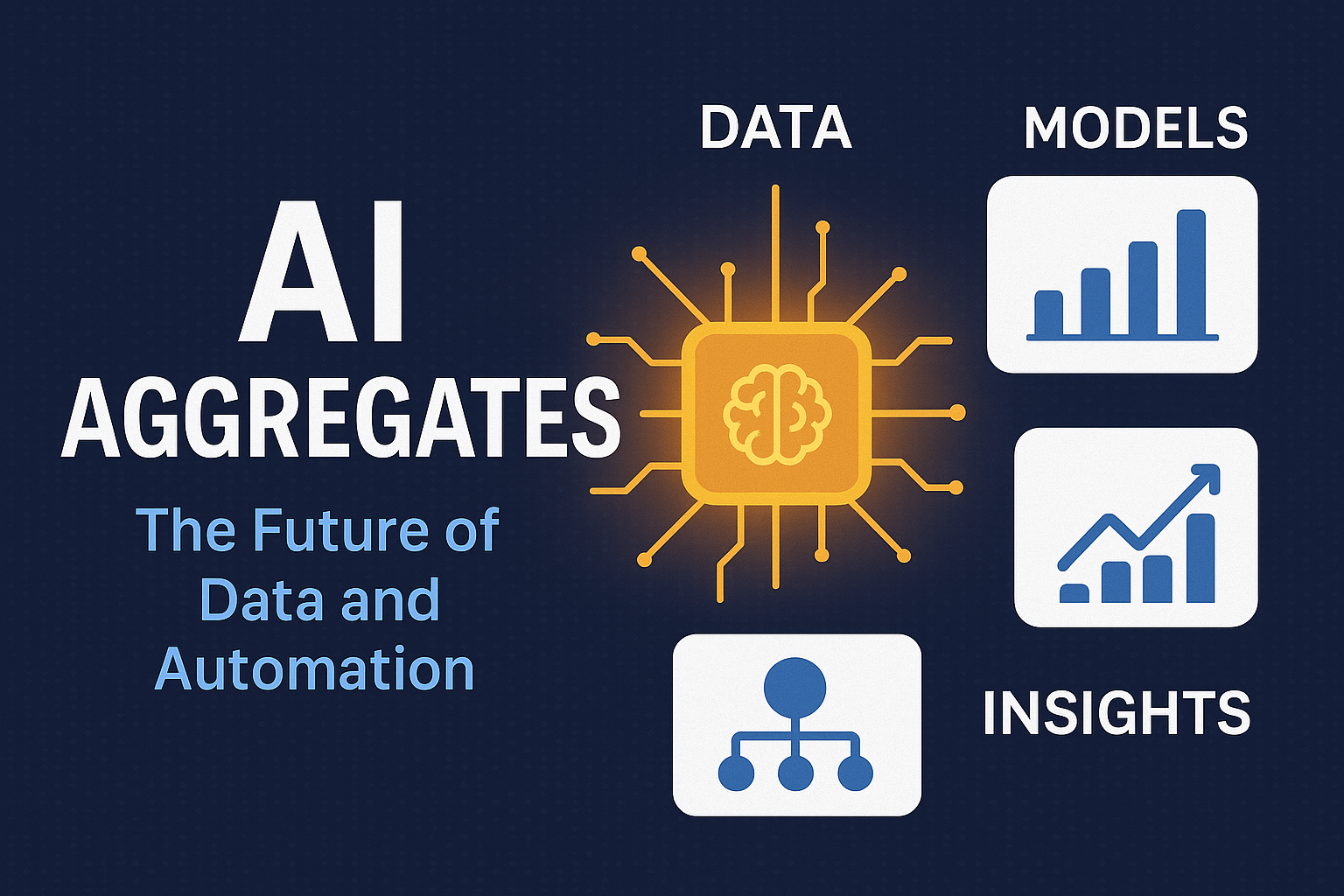
Artificial Intelligence (AI) is advancing quickly, and its most exciting concept is probably AI aggregates. Simply put, They are integrated systems that merge data, models, and decision-making into new blocks of smarter insights and agile automation.

From finance to healthcare, and e-commerce to education, AI aggregates are becoming necessary for businesses and individuals who need to make better decisions faster.

👉 If you’re new to AI, check our guide on Frames in Artificial Intelligence to understand how AI organizes knowledge.

What Are AI Aggregates?

An AI aggregate is a system or platform that accumulates inputs from a myriad of data, models, machine learning, and algorithms to present synthesized insight. They are essentially aggregators: however, they do more than show, they process, interpret, analyze, and suggest actions.

Consider it to be AI’s version of Google— it shows you data and helps you examine the data to take action.

👉 According to MIT Technology Review, It will be one of the key drivers of enterprise AI adoption by 2030.
Why Are AI Aggregates Important?

  1. Data Explosion – With so many billions of points of data generated every day, businesses require an easy-to-use AI aggregation like the Paragon platform to sort through data points.
  2. Faster Decisions – It is able to analyze information at the time of data generation.
  3. Cost Efficiency – The amount of time and labor humans are spending on data analysis will decrease.
  4. Accuracy & Precision – Machine learning can help on missed mistakes made by humans.
  5. Personalization – Personalization approaches provide segmented outputs for users within industries and contexts.

Key Components of AI Aggregates

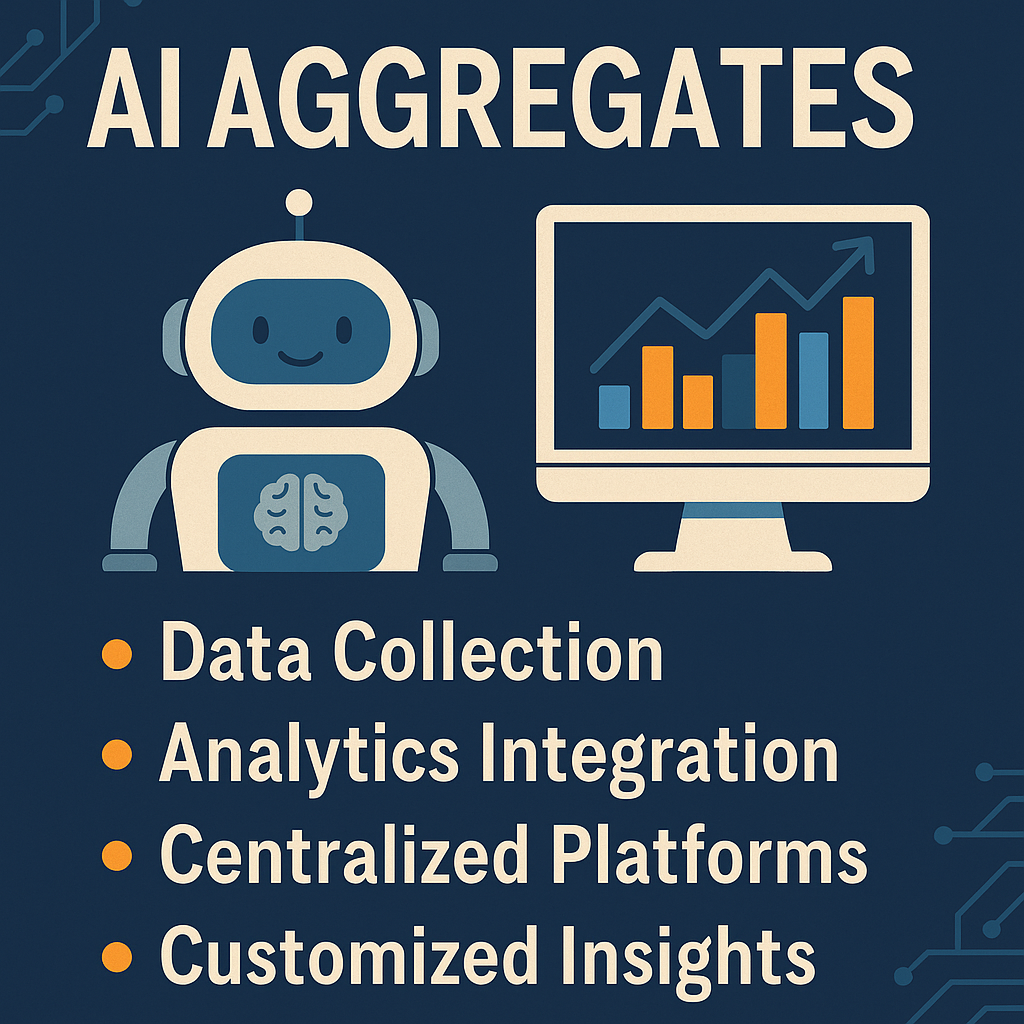
1. Data Aggregation

Gathers data from many different sources (databases, APIs, sensors).

2. Machine Learning Models

Analyzes trends, discovers patterns and generates predictions.

3. Decision Engine

Recommends the most appropriate action to take based on the aggregated data.

4. Visualization Tools

Distills complex findings into dashboards, charts and reports.

AI Aggregates

Examples of AI Aggregates in Action

1. Investing

AI aggregates multiple datasets market data, stock prices, trading signals to help investors.

2. Health

Captures patient records, lab results, and imaging data to make diagnosis faster and more reliable.

3. E-commerce

Platforms like Amazon uses that combine users profile and shopping tendencies with global and sitewide inventory trends to make personalized product recommendations.

4. Learning

Data on student learning to generate personalized learning paths.

👉 For a deeper dive into AI education tools, see our  Best AI Writing Tools.

Feature AI Aggregates Traditional Aggregators

Data Use

 Collect + Analyze

 Collect Only

Decision Support

✅ Yes

❌ No

Personalization

 ✅ Yes

❌ No

Automation

✅ Yes

❌ No

Unlike traditional aggregators that simply display information, AI aggregates interpret data and provide actionable insights.

Advantages

Smarter Insights

They don’t only report data, they suggest a constructive course of action.

Time Efficient

Captures patient records, lab results, and imaging data to make diagnosis faster and more reliable.

Scalable

It can work across multiple industries and keep up with an expanding data set.

Increased Productivity

It means companies can spend their time on action, not data.

Challenges and Limitations

There are potential downsides to using AI in presentations:

❌ Data Privacy Risks – Properly secure access to sensitive data.
❌ Bias in AI Models – If the AI model is trained on biased data, then results will be biased.
❌ Integration Issues – Accessing multiple platforms in one seamless workflow can be challenging.
❌ High Initial Costs – In some cases, the costs upfront can be significant.

👉 The World Economic Forum highlights data security as one of the biggest risks in AI adoption.

AI Aggregates and the Future of Work

With automation growing, AI aggregates will provide decision-support capabilities for workers. As a means to support employees and not take away jobs, they will assist employees with better decisionmaking and data-driven insights.

Best AI Aggregate Tools in 2025

  1. Tableau with AI Extensions – Data analytics + AI context.
  2.  Palantir Foundry – Enterprise data as collecting and sharing
  3. Google BigQuery AI – AI for clouddefined data.
  4.  Microsoft Power BI + Copilot AI – Business Intelligence + AI.

FAQs About AI Aggregates

Q1. What are AI aggregates?
AI aggregates are types of AI that can gather, analyze, and interpret data as part of their decision making process.

Q2. How do I distinguish normal aggregators from AI aggregates?
It can analyze data and recommend actions to take in contrast to standard aggregators, which can only report on data.

Q3. What industries have the largest AI aggregates?
They are prominent in finance, healthcare, retail, education, and manufacturing.

Q4. Should I expect AI aggregates to be expensive?
There can be an expensive start up process to using it, but the ROI is generally substantial.

Q5. Could small businesses utilize AI aggregates?
Yes, small business owners can use it readily through tools like Google BigQuery AI and Power BI.

Conclusion

AI aggregates are changing how businesses, and people, manage data in 2025. It combine data collection, analysis, and recommendations in one package, to give smarter, faster, and actionable insights.

They are the future of decision support systems, whether in finance, healthcare, education, or e-commerce.

For those hoping to lead, adopting early may provide the competitive edge that leads to success.

More From Author

You May Also Like

Leave a Reply

Your email address will not be published. Required fields are marked *