
 gulammdweb.com@gmail.com
Table of Contents
ToggleIntroduction to Frames in Artificial Intelligence
Artificial Intelligence (AI) mostly depends on knowledge representation, or the manner in which machines take in, organize, and use information. One of the most useful approaches to this is through frames in AI.
Frames assist AI systems in modeling the real world because they help structure information and data in a way that reflects human memory and reasoning.
👉 If you’re new to AI, you might also enjoy our guide on Best AI Writing Tools, where we review top platforms for content creators.
What Are Frames in AI?
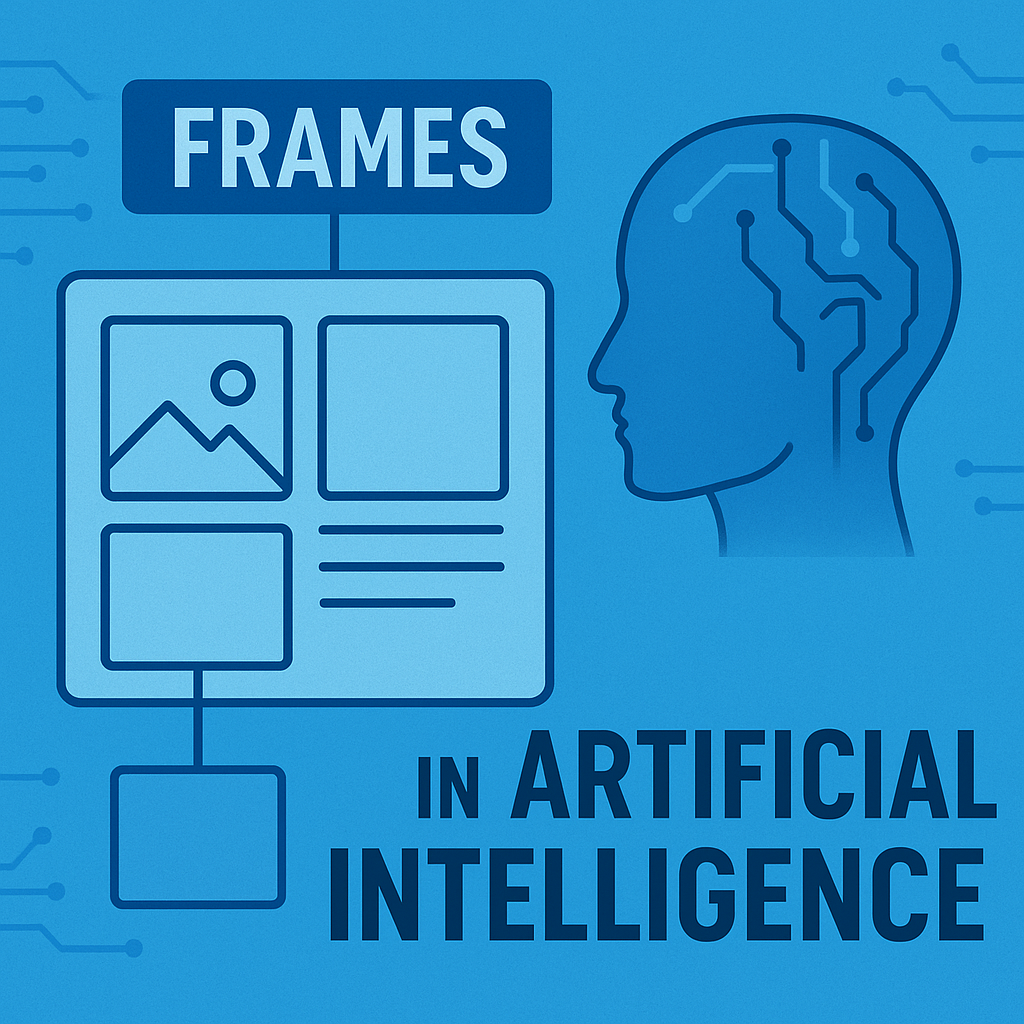
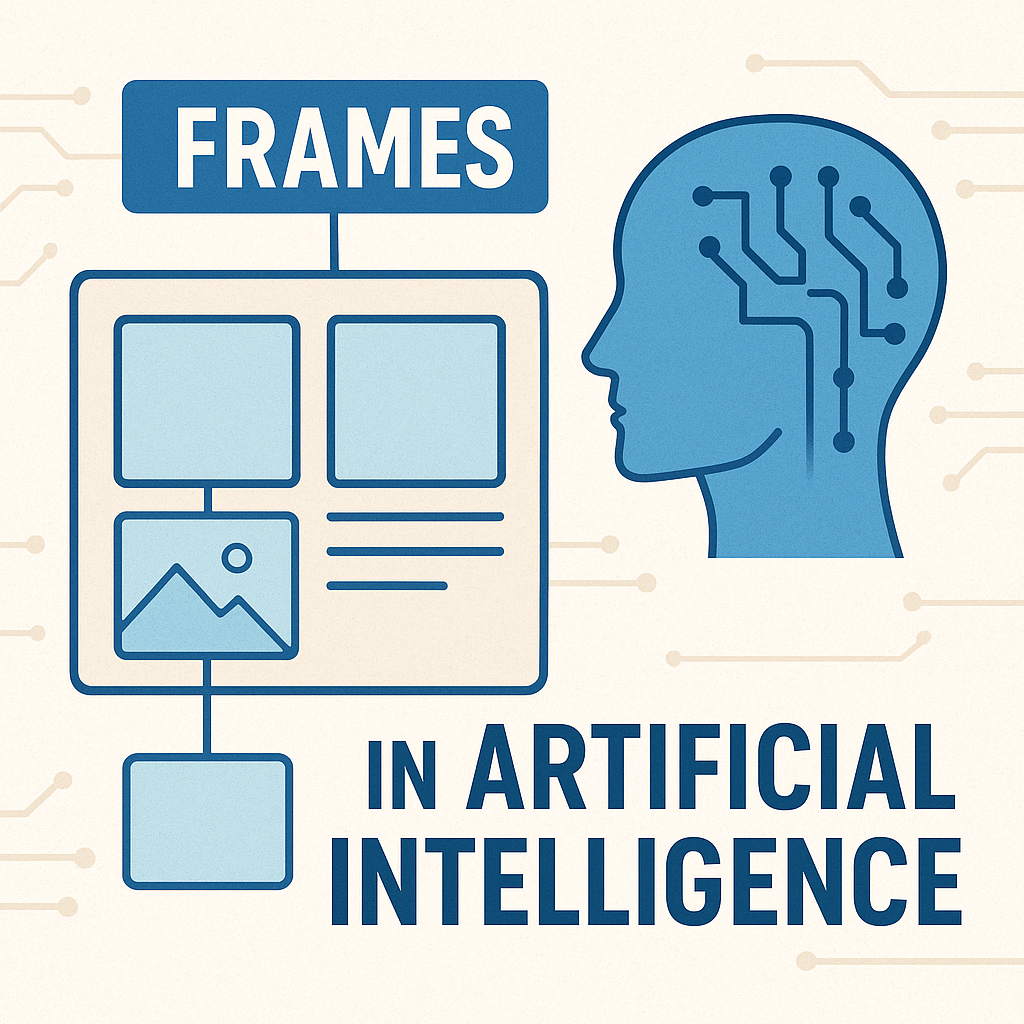
An AI frame refers to a data structure that is used to represent stereotypical situations, concepts, or objects. Each frame contains information about slots (attributes) and fillers (values).
For example “Car Frame“ may provide the following information:
- Slots: Color, Model, Engine, Owner.
- Fillers: Red, Tesla, Electric, John.
This allows AI systems to retrieve and store structured knowledge more effectively.
The Origin of Frames in Knowledge Representation
Marvin Minsky proposed frames in the 1970s. Minsky had designed frames for AI to represent knowledge–based understanding to manage complex real–world situations; structurally and hierarchically representing information.
👉 You can read his original paper “A Framework for Representing Knowledge” at the MIT AI Research Archives.
The Importance of Frames in Artificial Intelligence :
Simplifying Complex Information
Frames help AI decompose complex objects into easier concepts/attributes.
Structured Knowledge Representation
Frames organize knowledge in hierarchy and categories, rather than having them as disorganized facts.
Contextual Understanding
Frames enable AI to contextualize. For example, “bank“ in the context of a financial institution and “bank“ in the context of a riverbank.
Key Components of Frames in AI
Slots and Fillers
- Slots = attributes or properties.
- Fillers = values assigned to Slots.
Default Values
Slots can have default assumptions unless specified otherwise.
Hierarchies and Inheritance
Frames allow for inheritances, in that a “Dog Frame“ could have attributes from an all–encompassing “Animal Frame.“
Examples of Frames in Artificial Intelligence
Medical Diagnosis Frameworks
A “patient frame“ could potentially have slots for symptoms, diagnosis, and treatment.
Frameworks in Natural Language Processing
AI Chatbots use frames as a means to understand how a sentence is structured as well as understand context
Frameworks in Robots
Robots use frames in order to perceive objects in the environment and act accordingly.
Advantages of Using Frames in AI
- Structured complex data well.
- Facilitates reuse of frames in multiple applications.
- Assists artificial intelligence in reasoning and decision making.
Limitations of Frames in AI
- Rigid abstraction makes it difficult to deal with unforeseen data.
- Can be hard to represent ambiguity using frames.
- Limited capability to adapt to real time dynamic changes.
Frames vs Semantic Networks in AI
| Feature | Frames | Semantic Networks |
|---|---|---|
Representation |
Slots & Fillers |
Nodes & Edges |
Focus |
Attributes of objects |
Relationships between concepts |
Example |
Car: Brand=Tesla |
Tesla → is-a → Car |
Best Use |
Structured knowledge |
Relational knowledge |
- Frames → Emphasis on well structured slots and values.
- Semantic Networks → Emphasis on relationships between concepts.
Both approaches complement each other in knowledge representation.
Applications of Frames in AI Today
As AI evolves, frames are expected to integrate with:
- Deep Learning models: enrich contextual reasoning. Semantic
- Web technologies: enable more interlinked AI knowledge.
- Cognitive AI : combines structured frames and human-like reasoning.
Autonomous Systems: Self-driving cars depend on structured reasoning.
👉 Learn more from Waymo’s Research Blog.
👉 See how the World Health Organization (WHO) views AI’s role in medicine.
FAQs on Frames in Artificial Intelligence
Q1. Who invented frames in Artificial Intelligence?
Marvin Minsky in the 1970s.
Q2. What is the difference between slots and fillers?
Slots = attributes, Fillers = values assigned.
Q3. Where are frames used in Artificial Intelligence?
In NLP, robotics, expert systems, and reasoning tasks.
Q4. What are the disadvantages of frames in Artificial Intelligence?
They are rigid, and they have difficulty with ambiguity, and when data changes.
Q5. How are frames different from semantic networks?
Frames focus attributes, while semantic networks focus on relationships.
Future of Frames in AI
As AI develops, it is anticipated that frames will be integrated with:
Conclusion
In artificial intelligence, frames are still an essential concept in AI knowledge representation. Frames allow machines to store, retrieve, and reason with information in a structured way.
Frames are a popular means of encoding knowledge about the real world and home Still an important area of study and application in the fields of AI and human cognition–from medical diagnoses to natural language processing–frames have proved useful despite their limitations.




[…] you’re new to AI, check our guide on Frames in Artificial Intelligence to understand how AI organizes […]