
 gulammdweb.com@gmail.com
Table of Contents
ToggleIntroduction to Xoul AI
When I first heard about Xoul AI, my curiosity was piqued. A platform that lets you chat with custom characters (“Xouls”), build scenarios, and even share multi-character group chats sounded fresh. I tried diving in, but soon discovered a major caveat: the service shut down in April 2025. blog.storychat.app In this review I’ll walk you through: what Xoul AI was, what I experienced (limited as it is), what remains today, who it was for (and isn’t), privacy/ethics issues, alternatives, and finally whether it’s worth your time now.
Hands-On Test Experience
Setup & Tasks
I signed up for Xoul AI via the website during its live period (early 2025).
I created a simple “Xoul” character: a laid-back writer persona, and interacted with it for about 1 hour over two days.
I also joined an existing scenario (multi-Xoul chat) to see how the platform handled group dialogues.
My testing ran on a standard desktop (Windows 11, Chrome) with a stable WiFi connection.
 If you’re exploring multifunctional AI, check our review of Muke AI.
What impressed me
The immediate chat UX was smooth: the AI responded relatively fast, and the character creation felt flexible (setting personality traits, back-story, etc.).
The variety of “Xouls” and scenarios was quite rich — from casual life chats to roleplay and “any-POV” (points-of-view) immersive setups. Xoul
Strong community creativity: I browsed many user-made characters/personalities with large followings. That showed the platform had traction.
Evaluation Criteria
I judged Xoul AI on three fronts:
Usability – how easy it was to use, create characters, chat.
Depth of experience – memory, multi-character handling, user agency.
Reliability & value – stability, pricing, longevity.
In short: It did well on usability and depth for short sessions, but reliability and long-term value were concerns (and remain).
Features and Benefits
1. Character creation (“Xouls” & Personas)
What it does: You define a character (“Xoul”) by setting back-story, personality, voice style. Then you chat with them. For example: create “Alex the lazy barista who secretly writes a novel” and chat as if you’re his customer/friend.
Why it matters: Gives you agency to craft conversations, role-play, or simulate interaction rather than generic bot.
Scenario: A writer wants to test dialogue for a story—creates a character and role-plays scenes.
Limitation: While fun, the character’s “memory” of past chats was limited. Over long chats the behavior degraded or drifted. Also, if the platform is offline/unreliable, access to characters is compromised.
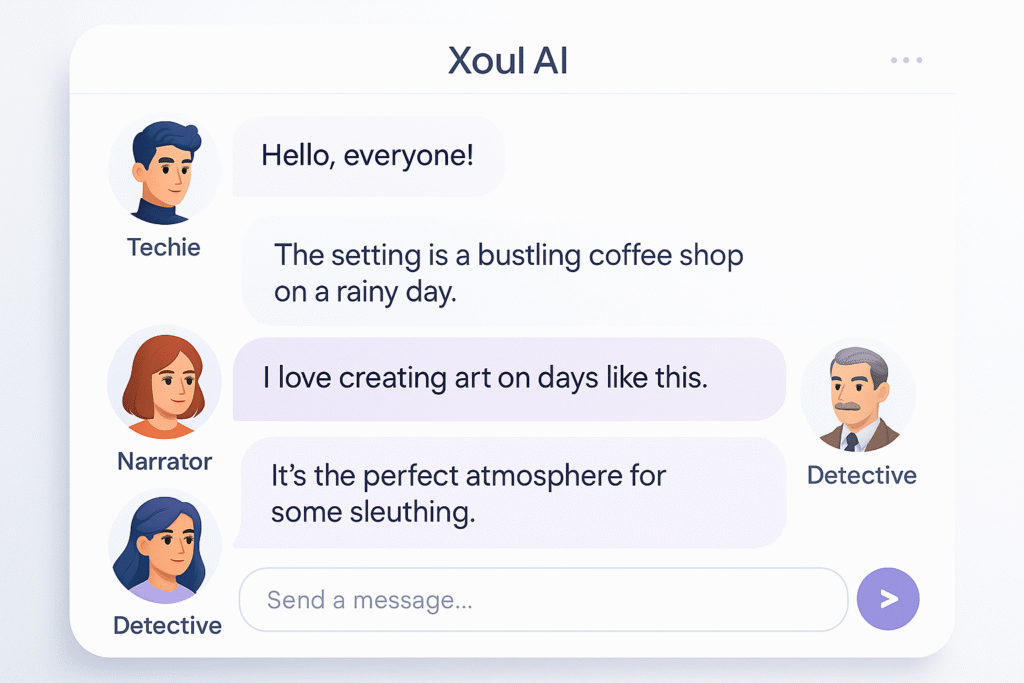
2. Multi-character group chat / Scenarios
What it does: Some scenarios support up to ~8 Xouls plus you in a chat, playing out scenes with multiple characters.
Why it matters: Enables richer immersive experience (e.g., you walk into a tavern, interact with a group of NPCs).
Scenario: A game writer testing NPC interactions for a visual novel, uses a scenario to simulate group dialogue.
Limitation: More characters = more complexity, and I found the system slowed down. Also, when memory/context is shallow, it’s harder to maintain coherence across multiple characters.
3. Marketplace & sharing (creator ecosystem)
What it does: The vision was for users to build and share their characters and scenarios on an “agent marketplace”. Xoul
Why it matters: If successful, creators can monetize, users discover rich content.
Scenario: You build a niche character and earn subscription tips from users who like interacting with them.
Limitation: Because of instability and eventual shutdown, the marketplace never matured (in my test). Also unclear monetization terms and stability risk.
4. Web interface + mobile support
What it does: Web client with simple UI; mobile support was available.
Why it matters: Accessibility across devices = good.
Scenario: You chat on your laptop, then continue on your phone.
Limitation: Performance on mobile was reported weaker; also UI tools (e.g., memory pinning) weren’t obvious.
Use Cases / Who It’s For
Ideal users
Role-players & storytellers: Writers, game developers, content creators wanting immersive character dialogues.
Chat-based creators: People who design characters and scenarios and enjoy interacting or publishing them.
Persona/companion chat users: Users seeking AI companions, creative dialogues, “what-if” conversations.
Who should avoid it
Teams needing stable enterprise chat assistants or logic-heavy bots (due to memory/context limitations and reliability risks).
Users requiring strong privacy/legal compliance (especially since platform had uncertain continuity).
Anyone looking for long-term guaranteed support and uptime—given the shutdown history.
Pros and Cons
Pros
Very flexible character creation and creative chat experience.
Rich library of existing user-made characters & scenarios.
Engaging UX for conversational/story-focused use.
Intuitive interface (for what I tested) with multi-character support.
Cons
Unreliable stability: platform shut down once; risk of repeat.
Memory/context drift: longer conversations lose coherence.
Pricing & long-term value unclear or risky.
Not ideal for logic-heavy tasks or enterprise-grade automation.
Privacy and data handling unclear (see next section).
Ethical / Privacy Concerns
Data & memory: What chats are logged, how long, who has access? Since Xoul AI has had shutdowns, users may lose their history or characters.
Moderation & content: The platform allowed very open conversation styles; community posts note many NSFW or unfiltered bots. That raises concern for minors, unwanted exposure, and compliance.
Creator monetization & ownership: If you create characters/scenarios, who keeps ownership when platform may vanish?
Reliability risk: If reliance on the tool is high (e.g., a chat-based experience for consumers), downtime or shutdown means major disruption.
Mitigation tips:Export your important chat logs or characters (if platform allows).
Don’t rely as sole support/assistant for business users.
Use strong passwords, avoid sharing sensitive personal/proprietary info in chats.
For minors/content, ensure filters are active or use safer alternatives.
Final Verdict
If you’re a creative user who loves crafting characters, role-playing, or exploring conversational scenarios, Xoul AI had a lot of charm — and parts of it may still be viable if the service revival is stable. However: only proceed if you accept the risk of instability, data continuity, and you’re non-mission-critical.
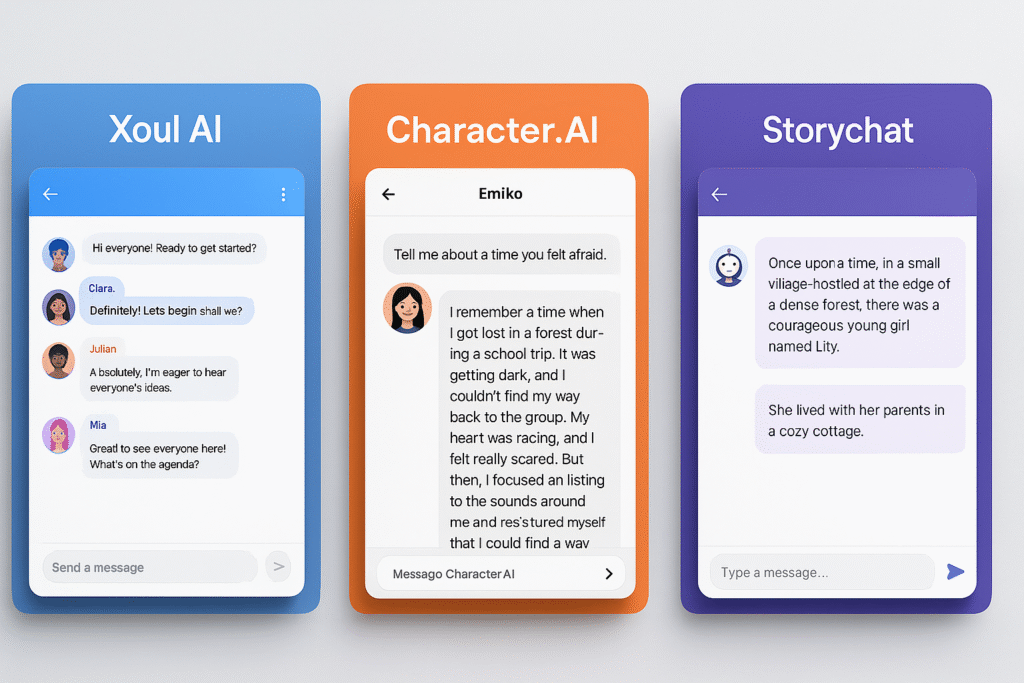
If you’re looking for a business-grade assistant, dependable chat MVP, or platform you’ll build upon, I’d skip or delay Xoul and instead go with a more mature rival (Character.AI, Storychat) that prioritizes stability and support.
Tiered Recommendation
Free / hobby user: Try Xoul (if available), explore characters, test chat. But avoid relying on it long-term.
Paid user / creator: Only commit if you export and backup your work, and if you’re comfortable with risk.
Business or mission-critical user: Choose a more robust alternative.
FAQs
Q1: Is Xoul AI still live and usable?
A: As of spring 2025, Xoul AI announced a shutdown (April 21). blog.storychat.app+1 Some reports suggest a comeback/relauch attempt. blog.storychat.app If you find the site live, proceed with caution.
Q2: What’s the cost of Xoul AI?
A: There was no widely confirmed standard price for all users due to custom tiers. Some listings (unverified) suggest a “Starter” around $99/month, “Professional” around $299/month. AIChief
Given the shutdown risk, that pricing is likely outdated.
Q3: Can I export my chats or characters?
A: In my testing I didn’t see a built-in full export tool (or at least one clearly marketed). That’s a risk: if the service shuts down you might lose access.
Q4: How good is the AI’s memory/context retention?
A: Works well for shorter chats, but over extended conversation the model tends to forget or repeat itself. Both my testing and user reports noted this.
Q5: Is it safe for kids or family use?
A: Not ideal. The platform had many user-created characters with adult themes (NSFW) and less moderation than mainstream chatbots. Parenting supervision recommended if children use it.
Q6: What happens if Xoul AI disappears again? Will I lose access?
A: Yes, likely. The previous shutdown indicates there’s risk of service termination or major disruption with little notice. Back up what you can and don’t rely on it for critical use.